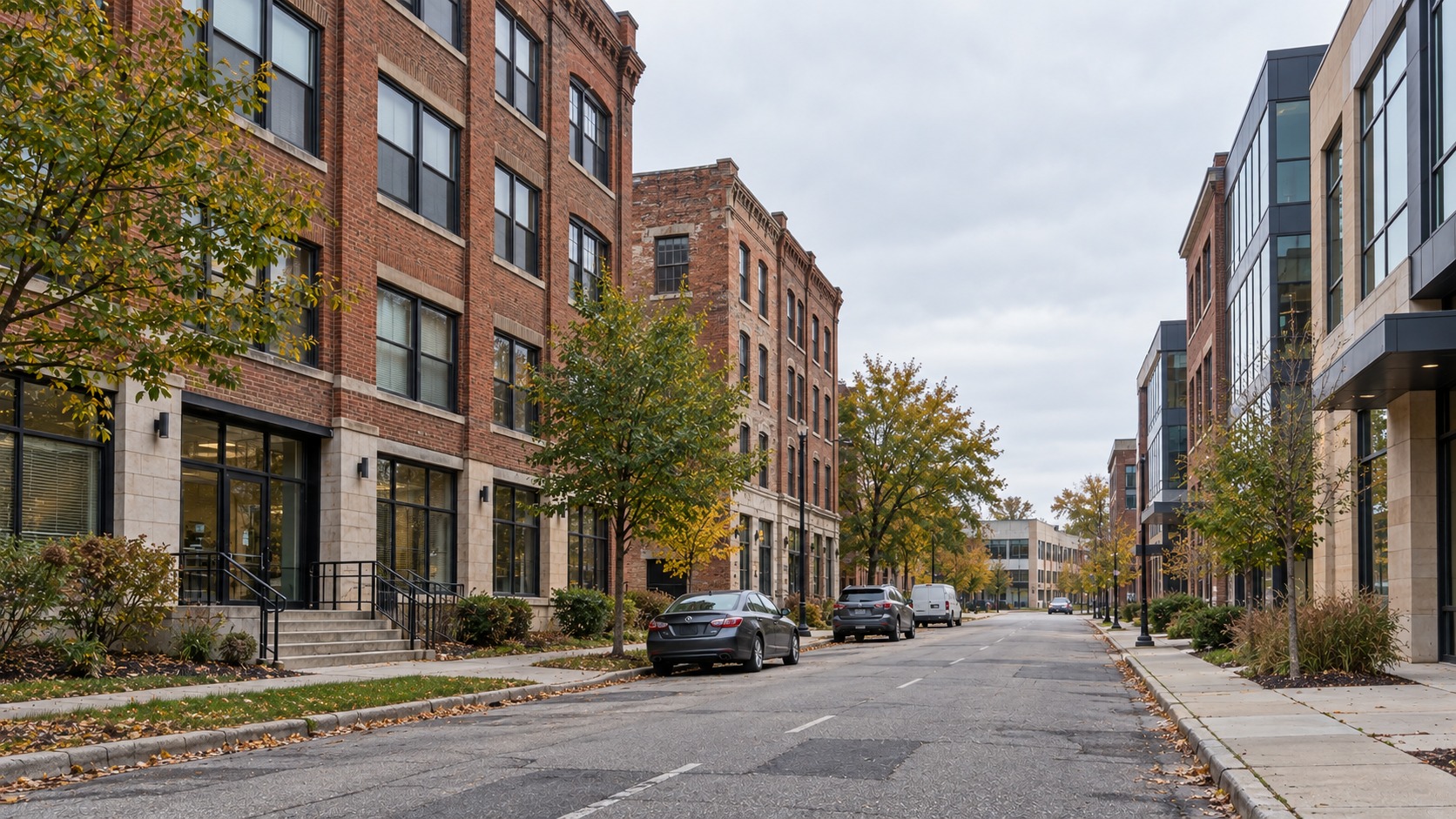
One in five square feet of Cleveland-area office space is sitting empty. So landlords must be cutting rents, right?
They aren't. And the gap between what the vacancy numbers suggest and what landlords actually advertise is where most businesses leave money on the table.
As a family-owned firm, North Pointe has leased, managed and advised on commercial property in Northeast Ohio for more than 50 years. Here's how we read the latest numbers for the three kinds of space our clients use most.
Office: You have leverage. Don't spend it all on rent.
CBRE puts Cleveland office vacancy at 20.3% for Q3 2026. Yet average asking rent rose to $19.57 per square foot.
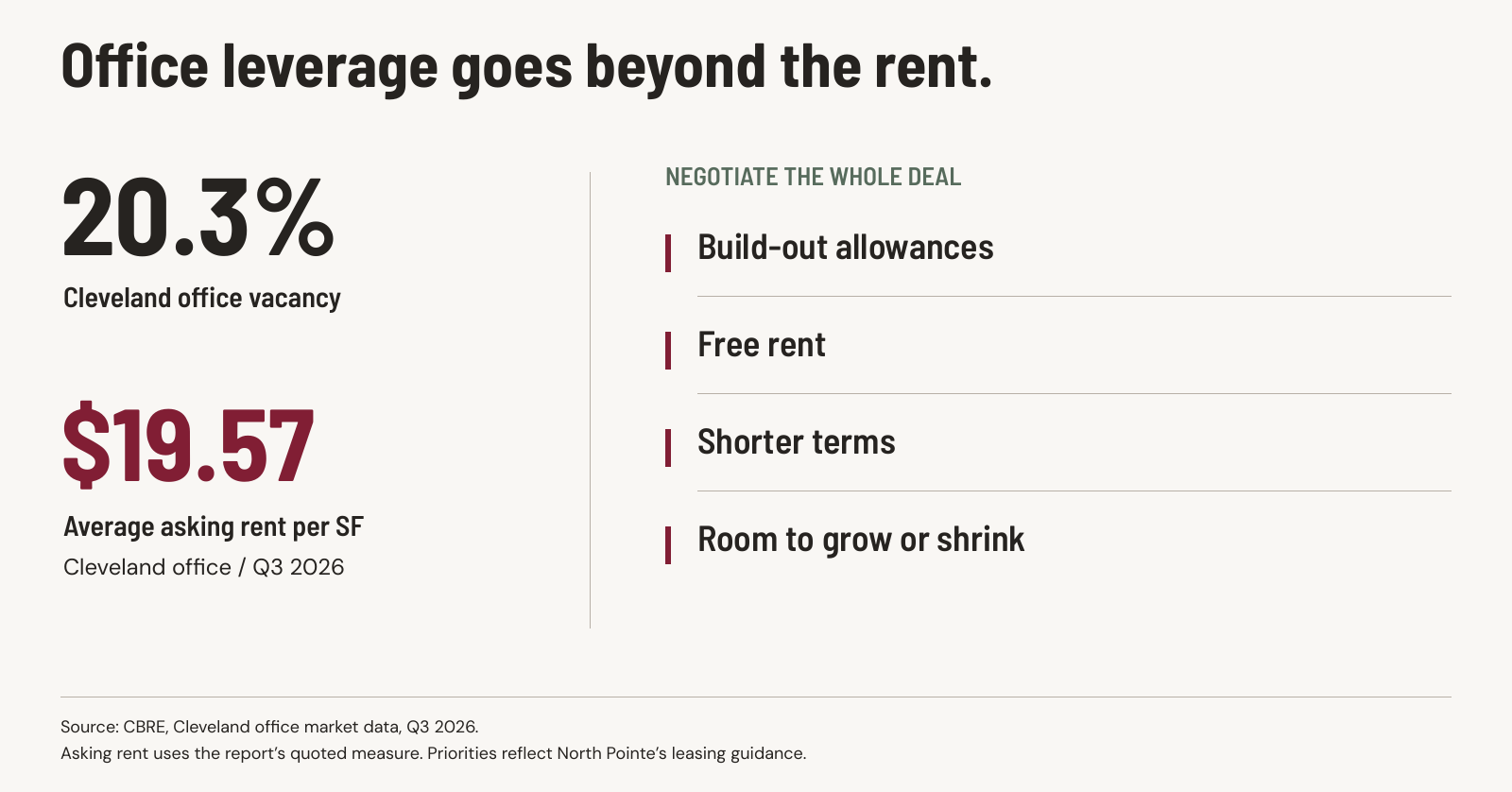
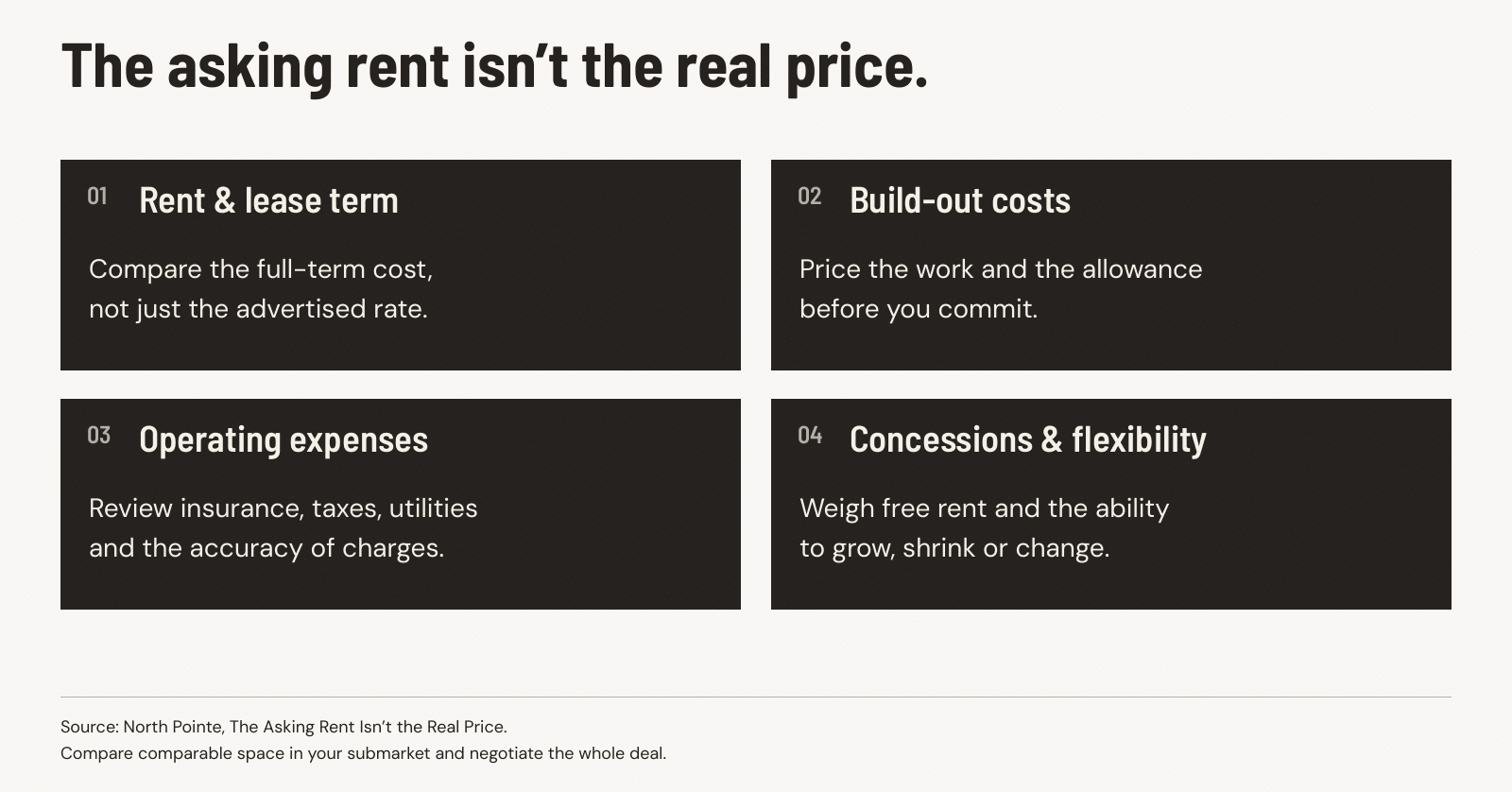
That's not a contradiction. Landlords protect their advertised rent because building valuations and loans depend on it. Because we also manage buildings, we see these negotiations from the owner's side, and we know where the real flexibility is: build-out allowances, free rent, shorter terms and the right to grow or shrink.
That's why the asking rent is the wrong number to focus on. A lower rate with a thin build-out allowance can cost you more over five years than a higher rate with a generous one. Operating expenses matter too. Rising insurance, taxes and utilities flow through to tenants, and from auditing those charges for our lease administration clients, we know billing errors are common and rarely challenged.
Leverage also varies by location and building. Downtown offers the widest choice of space and landlords with real reasons to negotiate, while some suburban submarkets are tightening. The right location depends on where your people and customers are, not on a regional average.
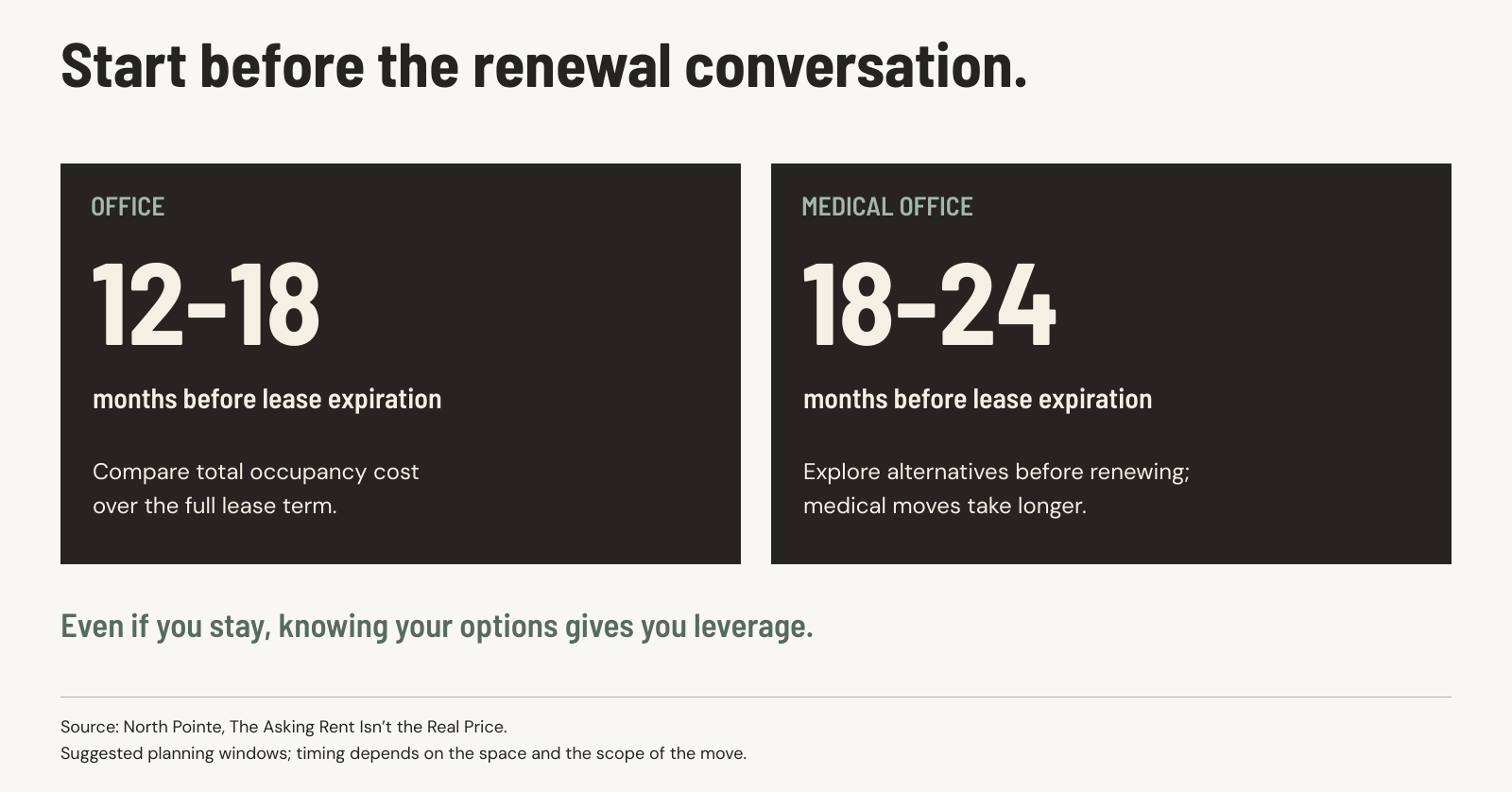
What to do: Start 12 to 18 months before your lease expires, compare total occupancy cost over the full term and know what comparable space in your submarket is actually leasing for. In this market, the businesses that come out ahead negotiate the whole deal, not just the rate.
Medical office: The hardest move is often the one most worth making.
Medical practices sign longer leases and stay put longer than other office tenants, according to Cushman & Wakefield. Healthcare build-outs are expensive, and a delayed move can mean weeks without seeing patients. That inertia pushes practices to renew on whatever terms they're offered.
Medical office is where we've spent much of our history. We've managed medical office buildings for decades and administered leases for one of the region's largest health systems for more than 40 years, so we know what a practice's space actually costs to build, run and leave.
We've seen practices on the verge of signing long renewals end up with more space, a better facility and roughly the same occupancy costs, simply because someone showed them their alternatives first.
What to do: Start 18 to 24 months ahead, since medical moves take longer, and find out what else is available before you sign a renewal. Even if you stay, knowing your options is what gives you leverage with your current landlord.
Flex space: The vacancy headlines aren't about you.
Colliers reports Northeast Ohio industrial vacancy rose to 5.89% in Q3, with about 829,000 square feet of negative absorption. But most of those losses came from warehouse and distribution buildings. Light industrial, where flex space sits, absorbed nearly 174,000 square feet.
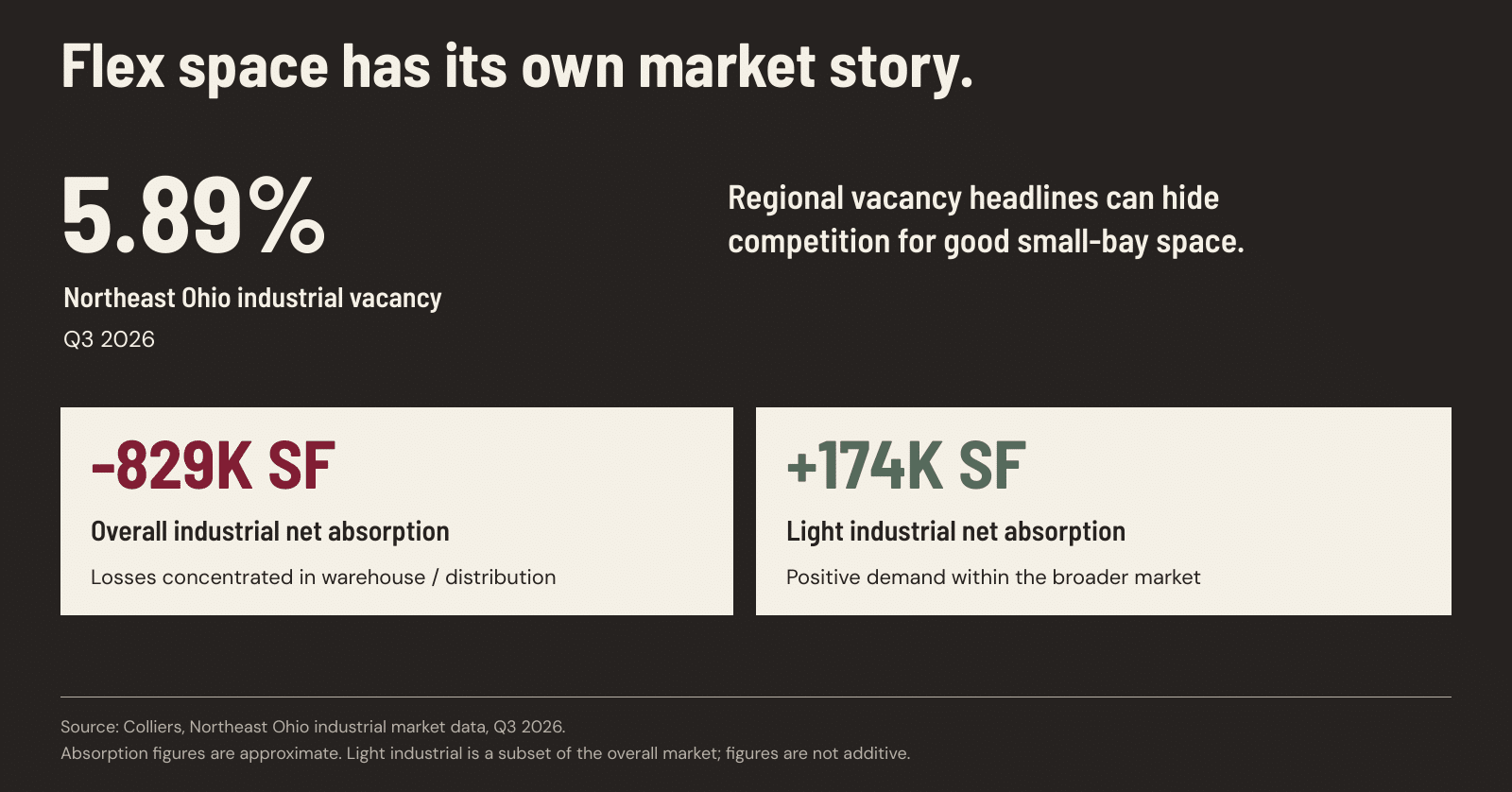
For a contractor, service company or small distributor that needs some office and some shop, good small-bay space is still competitive. These users also tend to get the least attention from large brokerage firms, whose industrial teams chase big warehouse deals.
Flex buildings vary more than almost any other property type. Two spaces of the same size can differ widely in office build-out, door count, power and ceiling height, and fixing the wrong one gets expensive. Our property and construction management experience helps clients price that work before they sign, not after.
What to do: Define your office-to-warehouse ratio, door and power needs before you tour, start your search early and build the cost of any changes into the comparison. The cheapest rent on the list is often not the cheapest building.
The bottom line
In every corner of this market, the advertised number is rarely the real story. Most mid-market companies negotiate a lease once every five or ten years, across the table from landlords and brokers who do it every day. We help level that table, with the same attention and advocacy a national firm saves for its largest clients.
Lease expiring in the next two years? Talk to us before your landlord starts the conversation. Reach me at gkestin@npointe.com.